Sóz Qazyna · in English
Classical Kazakh literature, explained in Kazakh
Sóz Qazyna is a reading platform for 19th- and early 20th-century Kazakh literature. You open a text by Abai or Ybyray Altynsarin, or a folk tale, tap a word you do not know, and get its meaning in that particular line — written in Kazakh, never translated into Russian or English.
The problem we solve
Kazakh classics are digitised and freely available — and almost unread. Their language carries a layer of vocabulary that left everyday speech a century ago: kerege, saba, shidem, konek. A teenager hits such a word, finds no quick answer, and closes the book. Digitising a text does not make it readable. Explaining it does.
Why it is not a dictionary and not an e-library
A dictionary gives the general meaning of a word; a reader needs the meaning in this sentence. An e-library gives the text; a reader needs a way through it. Sóz Qazyna answers five layers deep, and the first substantive answer wins:
- 1. Editorial gloss — a note written for this exact line of this exact work.
- 2. Editorial core — hand-written entries for function words and high-frequency vocabulary, where automation fails.
- 3. Morphological analysis — our own analyser strips affixes with vowel harmony, recovers the dictionary form and explains the form itself: keldi → kelu, simple past tense.
- 4. Dictionary entries and near-synonyms — 14,211 entries assembled from open sources and filtered of translation lines.
- 5. A language model — only for the sense in this sentence, cached and rate-limited, and always labelled as a model’s answer rather than an editor’s.
Every layer is in Kazakh. That is a deliberate constraint: a translation removes the effort of understanding and quietly displaces the language the whole product exists for.
Scholarly honesty, built into the product
Editions of the same classical text disagree. In Altynsarin’s «Kel, balalar, oqylyq» one line reads «Bastasańyz aldalap» in one edition and «Bastasańyz allalap» in another — coaxing a child with words, or beginning a task in the name of God. Two different meanings.
The platform shows both readings with their sources and withholds any graded question on the disputed line until a philologist rules on it. Historical spelling is never silently “corrected” as a typo. Every article carries a status — editorial draft, checked by a specialist, or model-generated — with the date of review, its source, and a button for readers to report an error.
What is already built
- 6
- literary works, full text
- 254
- chapters
- 390k
- characters of original text
- 39k
- words in the offline dictionary
- 138 min
- of Kazakh speech synthesis
- 93.5%
- of word occurrences have an explanation
These figures are computed from the content itself at build time, not typed in by hand. The product runs in a browser, installs on a phone and works offline. Reading is free and requires no account.
Who uses it
- Schools. Kazakh literature is compulsory from grade 5 to 11. Teachers get ready-made lessons and a class report showing what pupils actually understood — not what they retold. Pupils open a link, take the lesson and send back a short result code; no registration, no personal data collected.
- Adults returning to the language. People who read Kazakh with difficulty and give up on the first page of a classic.
- The Kazakh diaspora. Families in China, Uzbekistan, Mongolia, Türkiye, Germany and Russia, where children grow up outside the language environment and classical texts are doubly out of reach.
For international partners
The product is fully digital: no shipping, no customs, no local presence required. All library texts are in the public domain, so there are no content licences to renegotiate country by country.
The engine is separable from the language. The morphological analyser and the layered explanation mechanism are not tied to Kazakh vocabulary: moving to another Turkic language means replacing the dictionary and the affix tables, not rewriting the product. Azerbaijani, Kyrgyz, Uzbek and Turkish schools face the same problem with their own 19th-century classics, and for the same reason — obsolete vocabulary plus agglutinative morphology that defeats ordinary dictionary lookup.
School and centre licence
Annual per-class licence for schools abroad, weekend schools and language centres: teacher dashboard, class assignments, offline packages.
Engine licence (SDK / API)
The Kazakh morphological analyser and the dictionary layer, for developers of educational, publishing and translation products.
White-label for another Turkic language
The platform delivered under your language, with your corpus and dictionary — for academies, ministries and university departments.
Digitising commented editions
Publishers: a classical work prepared as a commented digital edition with a layered dictionary.
Sources, rights and current stage
The platform is in public beta. Texts come from open sources and their rights status is stated per work on the sources page. Photographs are taken from Wikimedia Commons with the licence verified programmatically, and the author and licence are shown next to every image.
What is not done yet, stated plainly: the dictionary articles have not been reviewed by a professional philologist; there are three finished lessons of the thirteen planned; the product has not yet been measured in a classroom. Those are exactly the gaps the project is working on now.
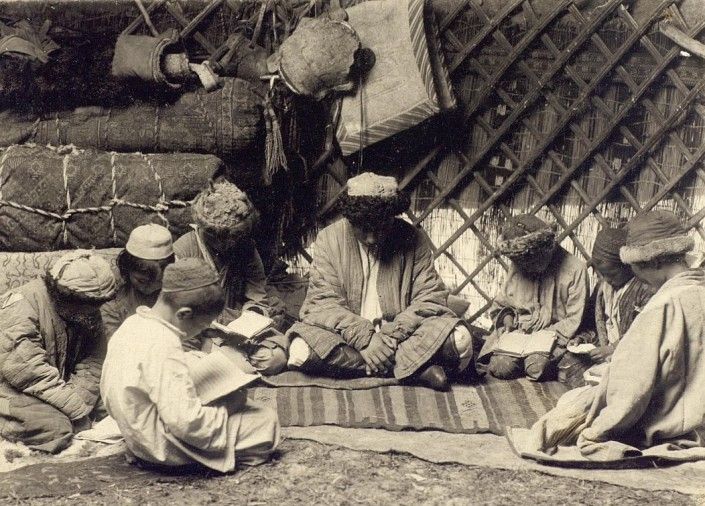
Photo: Дудин С. М., Поляков И. С. · Public domain (PD-old) 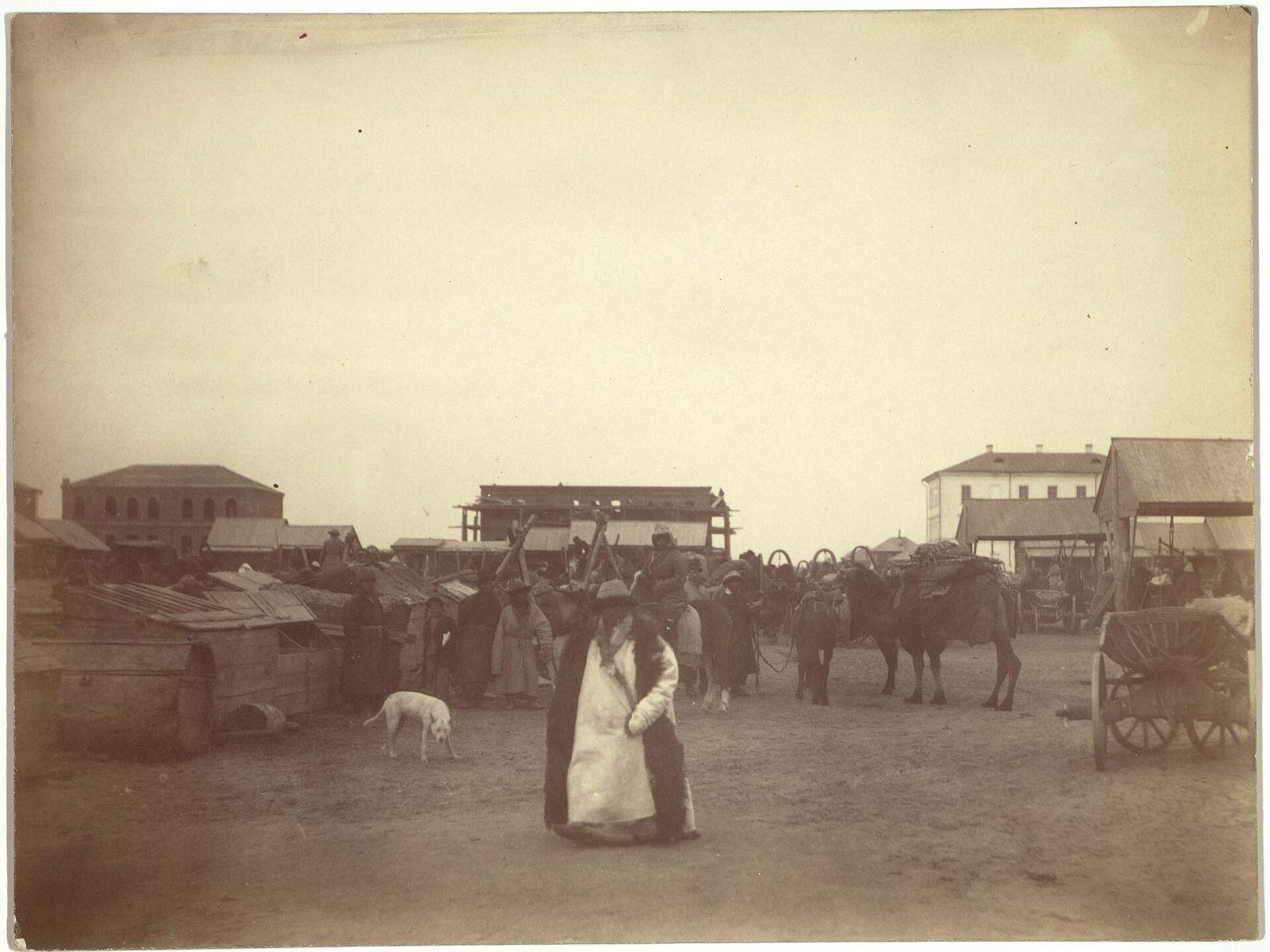
Photo: Library of Congress, Prints & Photographs · Public domain (PD-old-100) 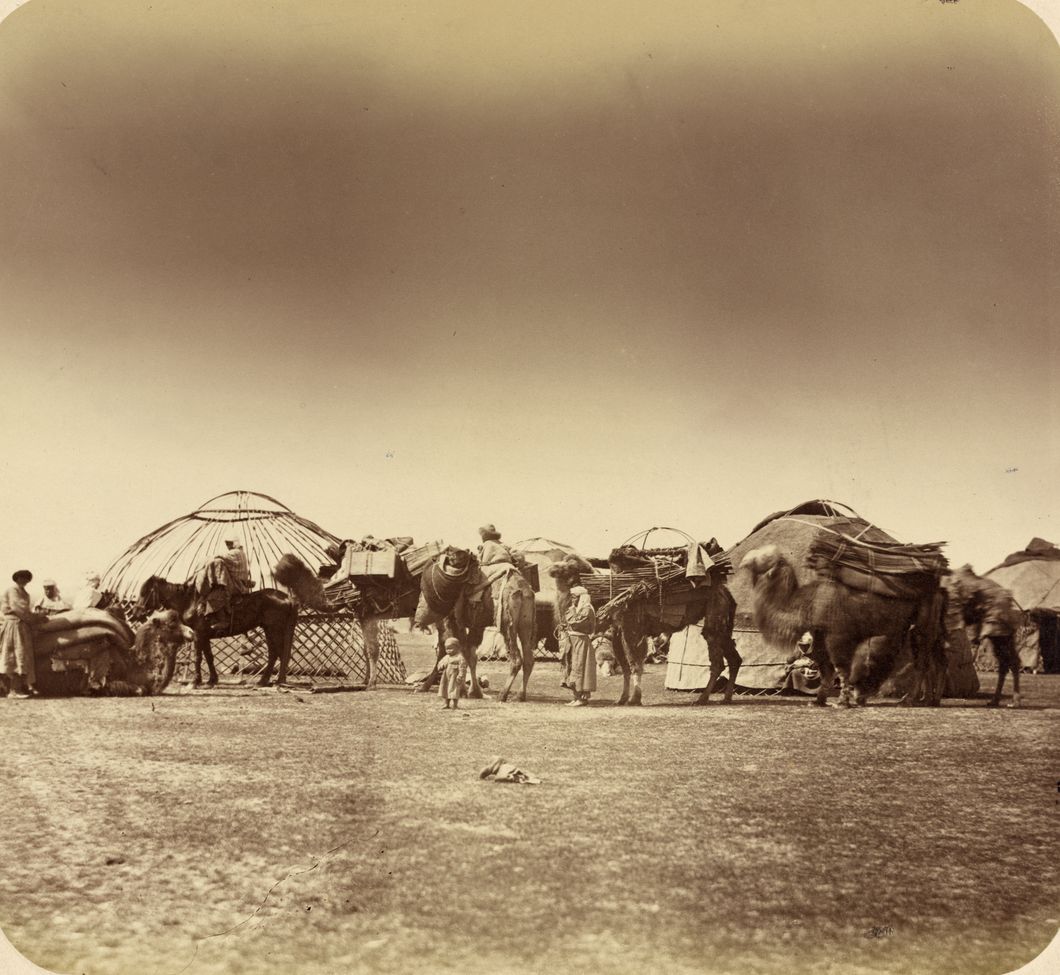
Photo: Александр Кун (Түркістан альбомы) · Public domain (PD-old-100)
The world these texts describe. Photographs from the 1860s–1890s, public domain; full credits on the sources page.
Get in touch
For licensing, pilots abroad or a white-label build in another Turkic language:
sozqazyna@gmail.comThe site itself is in Kazakh, by design. Open the platform · two-minute demo · sources and rights